
Do You Really Need BCAAs If You Eat Enough Protein?
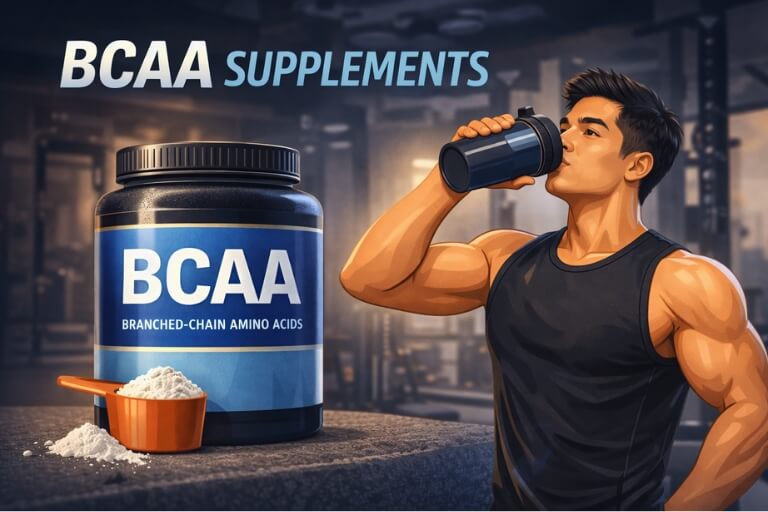
BCAAs are popular supplements often used during workouts to support muscle growth, reduce fatigue, and improve recovery. However, an important question remains: do you actually need BCAAs if your diet already provides enough protein?
Recent research suggests that while BCAAs play a role in muscle metabolism, their benefits may be limited for people who already consume sufficient protein. Understanding how muscle growth and amino acids work can help clarify whether BCAA supplements are truly necessary.
What Are BCAAs?
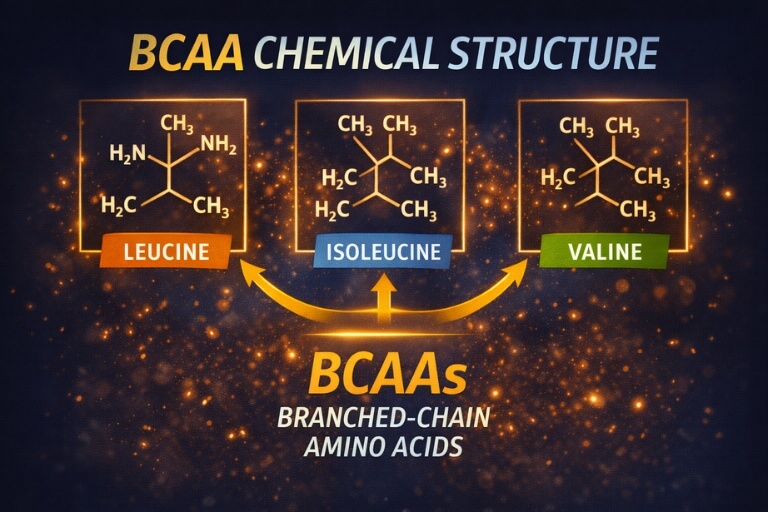
The Three Branched-Chain Amino Acids
BCAAs refer to three essential amino acids:
- leucine
- isoleucine
- valine
They are called “essential” because the body cannot produce them on its own. They must be obtained through food or supplements.
BCAAs became popular in sports nutrition because they are metabolized directly in muscle tissue rather than primarily in the liver. This characteristic led to the belief that they could directly support muscle performance and recovery during training.
Among these three amino acids, leucine plays the most important role in muscle metabolism because it helps activate the process known as muscle protein synthesis (MPS).
Why BCAAs Became Popular in Fitness
Leucine and Muscle Protein Synthesis
Muscle growth depends heavily on muscle protein synthesis, the biological process where the body builds new muscle proteins to repair fibers that were stressed during resistance training.
Leucine is known to act as a signal that activates this process. Because of this, supplement companies began marketing BCAAs as a way to stimulate muscle growth.
The idea was simple:
if leucine activates muscle protein synthesis, then consuming BCAAs should increase muscle growth.
However, the real physiology of muscle building is more complex than this simplified explanation.
Muscle Growth Requires All Essential Amino Acids
The Limitation of BCAA Supplements
Although leucine can trigger muscle protein synthesis, the body still requires all essential amino acids to actually build new muscle tissue.
Think of leucine as a switch that turns on the muscle-building process. Once the process is activated, the body still needs a complete set of amino acids to construct new muscle proteins.
If only BCAAs are present but the other essential amino acids are missing, the body cannot maintain muscle protein synthesis effectively.
In other words, BCAAs may start the process, but they cannot fully sustain it.
Complete Protein vs BCAA Supplements
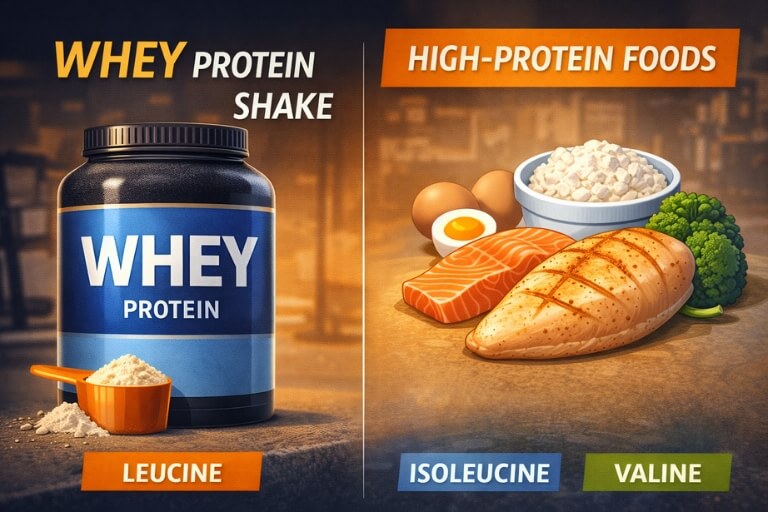
Whole Protein Sources Already Contain BCAAs
High-quality protein sources such as:
- eggs
- chicken
- fish
- dairy products
- whey protein
contain all nine essential amino acids, including the three BCAAs.
This means that when you consume enough protein from these sources, your body already receives the BCAAs it needs along with the other amino acids required to build muscle.
For example, whey protein naturally contains a high amount of leucine, which is one of the reasons it is commonly used to support muscle growth and recovery.
Because of this, people who consume enough complete protein generally do not gain additional muscle-building benefits from taking separate BCAA supplements.
What Research Says About BCAA Supplements

Studies Comparing BCAAs and Complete Protein
Scientific studies have compared the effects of BCAA supplementation with complete protein intake.
Many of these studies show that when total protein intake is already sufficient, adding extra BCAAs does not significantly increase muscle protein synthesis compared to consuming complete protein alone.
This happens because complete protein sources already provide all the amino acids required for muscle repair and growth.
As a result, isolated BCAA supplementation often provides limited additional benefits for individuals who already meet their daily protein requirements.
When BCAAs Might Still Be Useful
Although BCAA supplements may not be necessary for most people, there are a few situations where they might still offer some value.
Fasted Training
Some individuals train early in the morning without eating beforehand. In these situations, amino acid levels in the bloodstream may be relatively low.
Consuming BCAAs before or during a workout may provide a small amount of amino acids to support muscle metabolism.
However, even in this case, consuming a complete protein source would usually provide a stronger effect.
Low Daily Protein Intake
People who do not consume enough protein throughout the day may also benefit slightly from BCAA supplementation.
In this situation, BCAAs may help increase overall amino acid availability.
That said, increasing total daily protein intake through whole foods or protein supplements is generally a more effective strategy.
What Matters More Than BCAAs

Total Daily Protein Intake
The most important factor for muscle growth is total daily protein intake.
Research consistently suggests that individuals who perform resistance training should consume around:
1.6–2.2 grams of protein per kilogram of body weight per day.
Within this range, the body typically receives enough amino acids to support muscle growth and recovery.
Quality Protein Sources
Protein quality also matters. Foods that provide complete amino acid profiles help support muscle protein synthesis more effectively than isolated amino acids alone.
Examples include meat, eggs, dairy products, fish, and high-quality protein supplements.
Consistent Training and Recovery
Nutrition alone cannot build muscle. Progressive resistance training, proper recovery, and adequate sleep are equally important.
Without consistent training stimulus, even the most carefully planned nutrition strategy will have limited impact on muscle growth.
Conclusion
BCAAs help activate muscle protein synthesis, but muscle growth requires all essential amino acids, not just the three in BCAA supplements.
For more science-based guides on protein intake, supplements, and muscle-building nutrition, you can explore more articles at proteinpowderone.