
How Many Sets Per Muscle Group Per Week for Maximum Muscle Growth?
When building muscle, many people focus on exercises or lifting heavier weights, but an important factor is training volume, often measured by the number of sets per muscle group each week. While some believe that doing more sets always leads to faster muscle growth, research shows the relationship is more complex. Too little volume may not stimulate growth, while too much can cause fatigue and hinder recovery. Let’s explore the optimal approach together with ProteinPowderOne.
What Is Training Volume and Why Does It Matter?

Training Volume as a Key Driver of Hypertrophy
Training volume refers to the total amount of work performed during resistance training. In most hypertrophy research, volume is measured as the number of effective sets performed per muscle group each week.
When you perform a challenging set with sufficient load and effort, your muscles experience what is known as mechanical tension. Mechanical tension is one of the primary signals that stimulates muscle growth. It occurs when muscle fibers generate force under load, creating the stimulus needed for adaptation.
Each effective set contributes a certain amount of stimulus for muscle growth. As total weekly volume increases, the cumulative stimulus placed on the muscle also increases. This is why increasing training volume often leads to greater hypertrophy—up to a certain point.
More Volume Is Not Always Better
Although training volume plays a critical role in muscle growth, the relationship between volume and hypertrophy is not unlimited or perfectly linear.
Research suggests that beyond a certain level of volume, the additional benefits begin to diminish. At very high volumes, the body may struggle to recover fully between sessions. This can lead to accumulated fatigue, reduced training performance, and slower progress over time.
In other words, while increasing volume can be beneficial, excessive volume may actually reduce the effectiveness of your training program.
How Many Sets Per Week Are Enough for Muscle Growth?
The Minimum Effective Volume
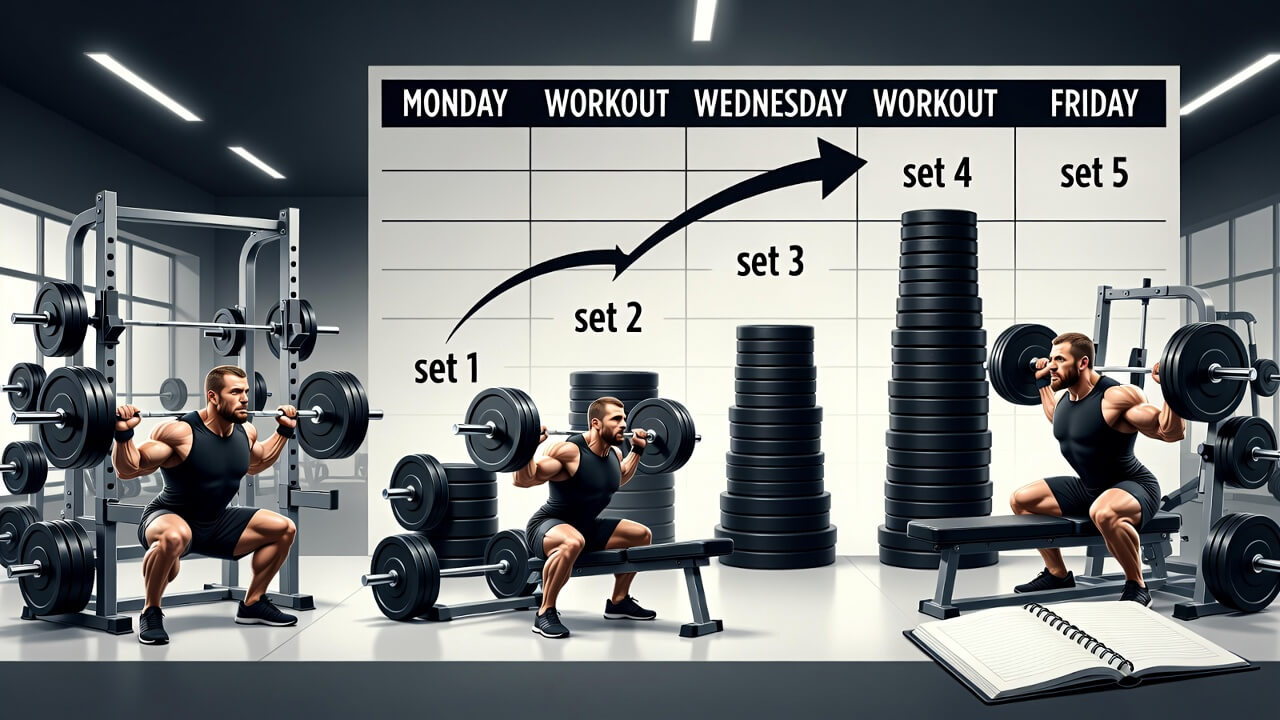
Studies on resistance training suggest that approximately 8–10 sets per muscle group per week may be enough to stimulate muscle growth for many individuals.
At this level of volume, muscles receive enough stimulus to increase muscle protein synthesis and begin adapting to the training stress. This is particularly true for beginners or individuals who are relatively new to resistance training.
Beginners often experience rapid muscle growth because their bodies are highly responsive to even moderate training stimulus.
The Optimal Range for Most Lifters
For individuals with more training experience, research generally suggests that 10–20 sets per muscle group per week tends to be an effective range for maximizing hypertrophy.
Within this range, muscles receive sufficient stimulus for growth while still allowing enough recovery between sessions.
For example, if you train chest twice per week, you might perform around 5–10 sets per session to reach a weekly total within the optimal range.
This approach allows you to distribute volume across multiple workouts rather than concentrating all the sets in a single session.
Factors That Influence Optimal Training Volume

Training Experience
Training experience significantly affects how much volume a person can handle effectively.
Beginners typically respond well to relatively low or moderate volumes because their bodies are not yet adapted to resistance training. As a result, even a small amount of stimulus can lead to noticeable improvements in strength and muscle size.
More advanced lifters, however, often require higher volumes to continue making progress. Because their bodies are already adapted to training stress, additional stimulus is needed to trigger further muscle growth.
At the same time, advanced lifters must manage fatigue more carefully, since higher volumes also increase recovery demands.
Training Frequency
Training frequency also influences how volume should be distributed.
If a muscle group is trained only once per week, all the weekly sets must be performed in a single workout. This can make the session very long and potentially reduce the quality of later sets due to fatigue.
On the other hand, training a muscle group two or three times per week allows volume to be distributed across multiple sessions. This approach often improves the quality of each set and may lead to better overall performance.
Set Quality Matters More Than Set Quantity
What Are Effective Sets?
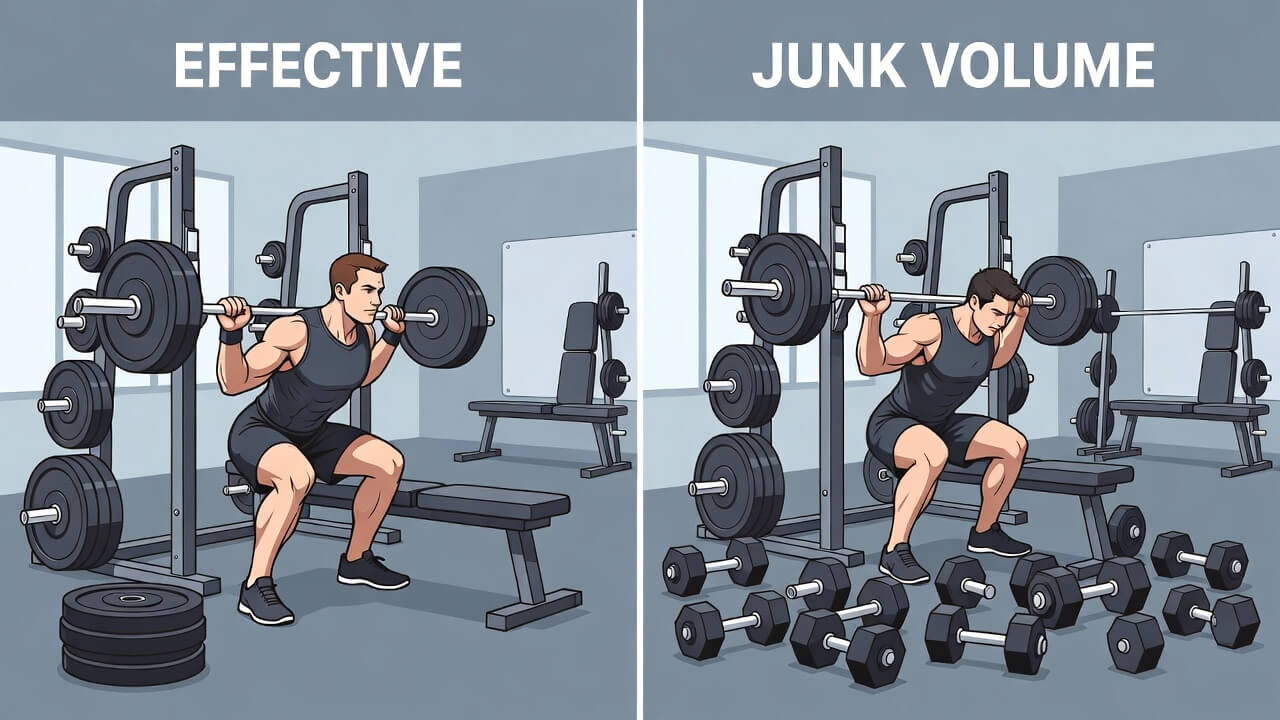
Not all sets contribute equally to muscle growth. In hypertrophy research, the concept of effective sets is used to describe sets that provide a meaningful growth stimulus.
A set is generally considered effective when it is performed with enough effort and intensity, typically ending within one to three repetitions of muscular failure.
Sets that are performed too far from failure may not create sufficient mechanical tension to stimulate hypertrophy.
The Problem With Junk Volume
When training volume becomes excessively high, some sets may become junk volume. Junk volume refers to sets that add fatigue without providing much additional benefit for muscle growth.
These sets often occur when a workout becomes very long or when fatigue accumulates to the point where the quality of effort decreases.
Too much junk volume can reduce recovery capacity and negatively affect performance in future training sessions.
How to Apply Training Volume in Practice
Start With Moderate Volume
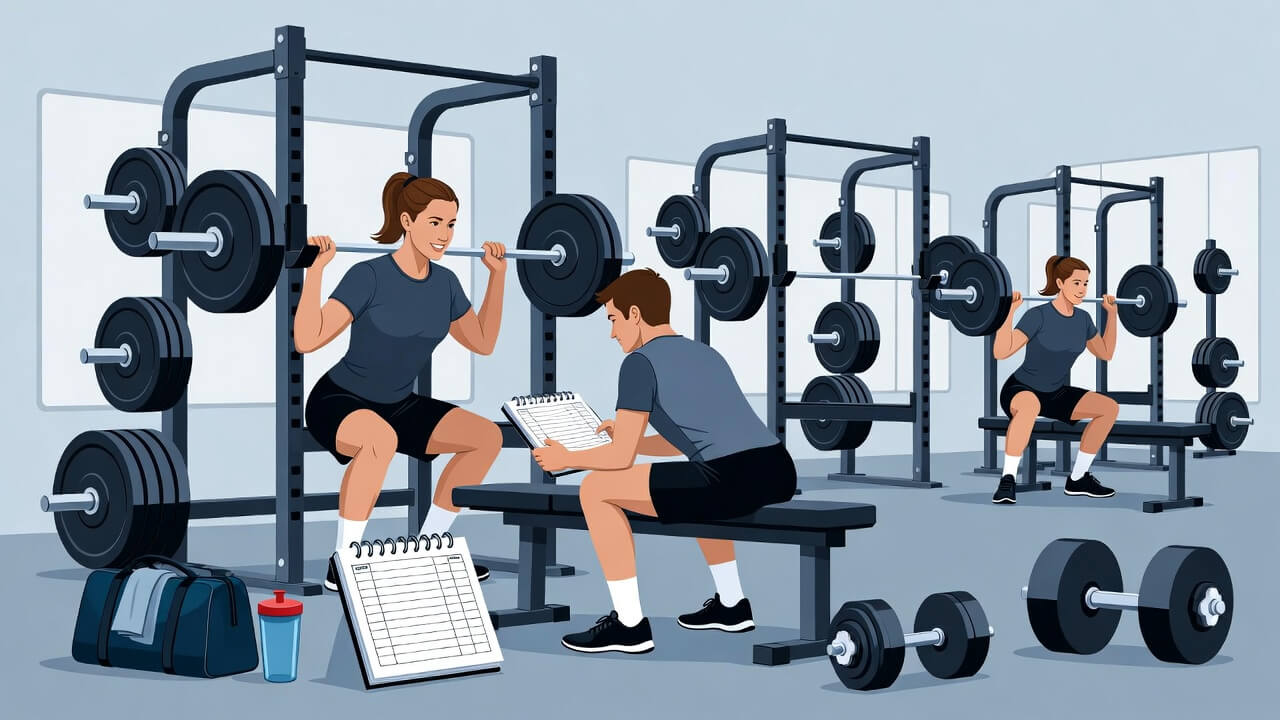
A practical approach for most lifters is to begin with a moderate training volume of around 10–12 sets per muscle group per week.
This level typically provides enough stimulus for muscle growth while still allowing adequate recovery.
From this starting point, volume can be adjusted based on individual progress and recovery.
Increase Volume When Necessary
If a particular muscle group stops progressing, gradually increasing weekly volume by a few sets may help provide additional stimulus for growth.
However, increases in volume should be made gradually to avoid overwhelming the body’s recovery capacity.
Monitoring performance, fatigue levels, and overall progress can help determine whether additional volume is beneficial.
Conclusion
The key takeaway is simple: most people can build muscle effectively with about 10–20 sets per muscle group per week. Focus on high‑quality sets, train close to failure, and make sure you recover well between workouts.