
Mass Gainer vs Whey: Which One Helps You Gain Weight Faster?
For anyone struggling to gain weight, supplements often seem like the fastest solution. Two of the most common options are mass gainers and whey protein, but many people are unsure which one actually works better. The debate around mass gainer vs whey usually comes down to one question: calories or protein?
This article provides a clear comparison of mass gainer vs whey, explaining how each supplement works, which one helps you gain weight faster, when ectomorph body types may benefit more, and how to apply clean bulking principles for sustainable results.
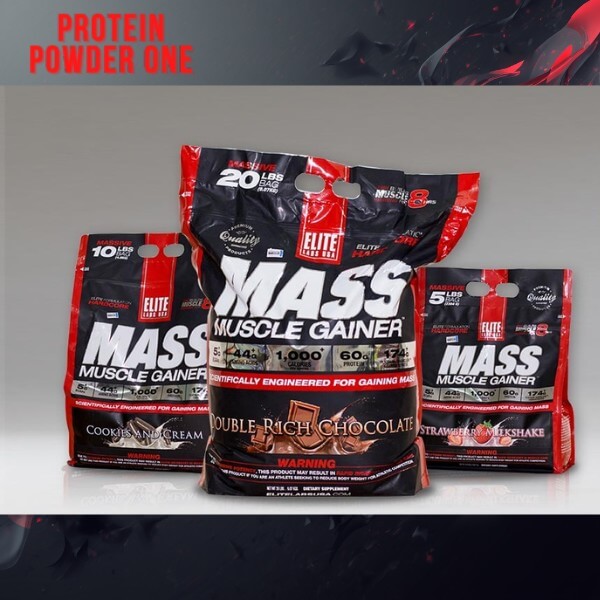
Understanding the Goal: Weight Gain vs Muscle Gain
Before comparing mass gainer vs whey, it is important to define the goal. Weight gain occurs when calorie intake consistently exceeds calorie expenditure. Muscle gain, however, depends on resistance training, adequate protein intake, and recovery.
Many people confuse rapid weight gain with quality muscle gain. While both supplements can contribute to increased body weight, the type of weight gained can differ significantly depending on the choice.
What Is a Mass Gainer?
Mass gainers are high-calorie supplements designed to help users consume a large number of calories easily. A single serving often contains:
- 500 to 1,200 calories
- Moderate protein content
- High amounts of carbohydrates
- Added fats and sugars
Mass gainers are essentially calorie-dense shakes aimed at people who struggle to eat enough food.
How Mass Gainers Promote Weight Gain
Mass gainers work primarily by increasing total calorie intake. If you consistently consume more calories than your body burns, weight gain is almost guaranteed. This makes mass gainers effective for fast weight gain, especially for individuals with small appetites.
However, not all weight gained from mass gainers is muscle. Excess calories can easily be stored as body fat if training and macronutrient balance are not managed properly.
What Is Whey Protein?
Whey protein is a high-quality protein supplement derived from milk. Unlike mass gainers, whey protein is relatively low in calories and high in protein per serving.
A typical serving of whey protein provides:
- 20 to 30 grams of protein
- Minimal carbohydrates and fats
- 100 to 150 calories
Whey protein is designed to support muscle protein synthesis rather than large calorie surpluses.
How Whey Supports Weight Gain
Whey protein helps weight gain indirectly by supporting muscle growth. When combined with resistance training and adequate calories from whole foods, whey protein helps ensure muscles have the amino acids needed to grow.
In the mass gainer vs whey comparison, whey is slower for overall weight gain but often leads to higher-quality gains.
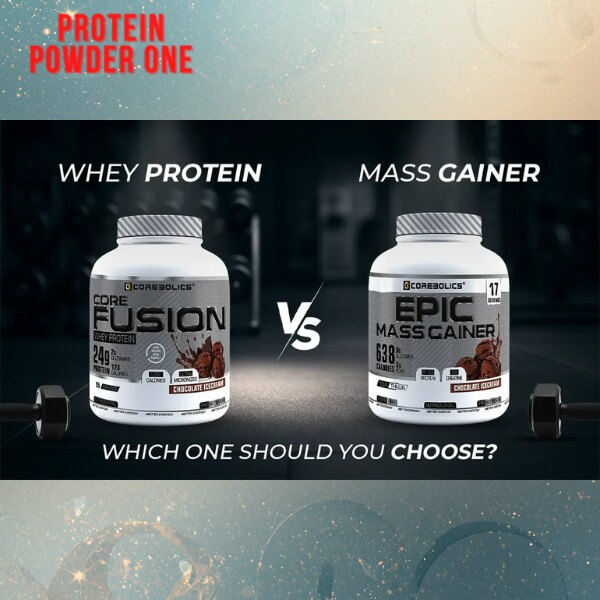
Mass Gainer vs Whey: Calories vs Protein
Calorie Density
Mass gainers are unmatched when it comes to calorie density. Drinking one shake can add hundreds of calories with minimal effort. For individuals who struggle to eat large meals, this is a major advantage.
Whey protein, on the other hand, contributes very few calories. To gain weight with whey alone, additional calories must come from meals or added ingredients like oats, nut butter, or milk.
Protein Quality
Whey protein delivers a high concentration of essential amino acids, particularly leucine, which is critical for muscle protein synthesis. Mass gainers often contain protein, but the protein-to-calorie ratio is much lower.
From a muscle-building perspective, whey protein is superior.
Fat Gain Risk
Because mass gainers are calorie-heavy and often carb-dominant, they increase the risk of fat gain if intake exceeds what training can support. Whey protein carries a much lower risk of unwanted fat gain.
Ectomorph Use Case: Who Benefits Most?
Ectomorphs are individuals who are naturally lean, have fast metabolisms, and struggle to gain weight. This group is often drawn to mass gainers.
When Mass Gainers Help Ectomorphs
Mass gainers can be useful for ectomorphs who:
- Cannot meet calorie needs through food
- Have very high daily energy expenditure
- Need a convenient way to boost calories
In these cases, mass gainers act as a practical calorie shortcut.
When Whey Is the Better Option
Even ectomorphs benefit from prioritizing protein quality. Whey protein combined with calorie-dense whole foods often produces better long-term results than relying heavily on mass gainers alone.
In the mass gainer vs whey discussion for ectomorphs, the best solution is often a strategic combination rather than choosing only one.
Clean Bulking: A Smarter Approach to Weight Gain
Clean bulking focuses on gaining weight while minimizing fat gain. This approach emphasizes food quality, training consistency, and controlled calorie surplus.
Using Whey for Clean Bulking
Whey protein fits perfectly into a clean bulking plan. It allows precise control of protein intake without excessive calories. Users can then adjust calories through whole foods like rice, potatoes, healthy fats, and lean proteins.
Using Mass Gainers Carefully
Mass gainers can still be used during clean bulking, but portion control is critical. Half servings or homemade gainers made from whey, oats, fruit, and nut butter offer better control over ingredients and calorie quality.
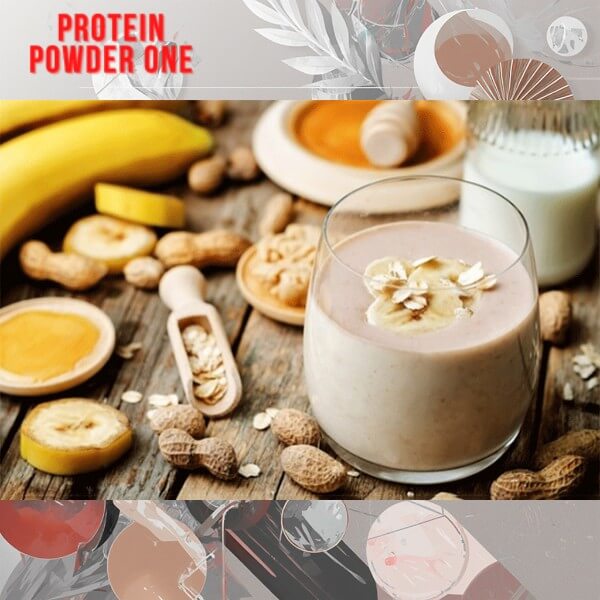
Which Helps You Gain Weight Faster?
If the sole goal is to increase the number on the scale as quickly as possible, mass gainers generally work faster. The high calorie content makes it easier to maintain a surplus.
However, faster weight gain does not always mean better results. Whey protein leads to slower but higher-quality gains, with a greater proportion of muscle and less fat.
The real answer in the mass gainer vs whey debate depends on priorities: speed versus quality.
Who Should Choose Mass Gainer?
Mass gainers may be suitable for:
- Hard gainers with low appetite
- Individuals with physically demanding lifestyles
- Short-term weight gain goals
These users should monitor body composition closely to avoid excessive fat gain.
Who Should Choose Whey Protein?
Whey protein is the better choice for:
- Clean bulking goals
- Long-term muscle development
- Individuals who can meet calorie needs through food
Whey offers flexibility, precision, and better nutritional control.
Conclusion
When comparing mass gainer vs whey, mass gainers help you gain weight faster due to their high calorie content, while whey protein supports cleaner, more sustainable muscle growth. Mass gainers are effective tools for those who struggle to eat enough, especially ectomorphs, but they carry a higher risk of fat gain.
For most people, whey protein combined with calorie-dense whole foods provides the best balance between weight gain and muscle quality. Choosing the right supplement depends on your metabolism, appetite, training intensity, and long-term goals.