
Protein Intake for Muscle Growth: How Much Do You Really Need?
If building muscle were just about eating more protein, everyone with a high-protein diet would look muscular.
But that’s not how the body works.
One of the most common mistakes is assuming that more protein automatically leads to more muscle growth. In reality, protein intake only works within a certain range — beyond that, the benefits don’t keep increasing.
At the same time, eating too little protein limits your ability to build muscle, no matter how hard you train.
So the real question isn’t “how much protein can you eat?”
It’s:
How much protein does your body actually use to build muscle?
The Real Protein Range for Muscle Growth
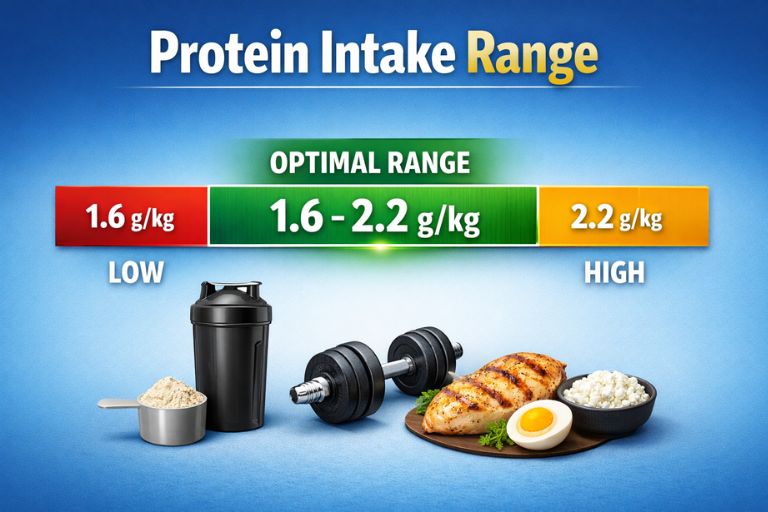
For most people, the optimal protein intake for muscle growth falls between:
1.6 to 2.2 grams of protein per kilogram of body weight per day
This isn’t a random number — it’s a range.
And that matters.
Because your exact protein needs aren’t fixed. They depend on factors like your training intensity, calorie intake, and overall experience level.
But here’s the key takeaway:
- Below this range → you’re likely under-eating protein for muscle growth
- Within this range → you’re maximizing your muscle-building potential
- Above this range → you’re not gaining additional benefits in terms of muscle growth
In other words:
More is not better — enough is what matters.
Why This Range Works (And Why More Doesn’t Help)
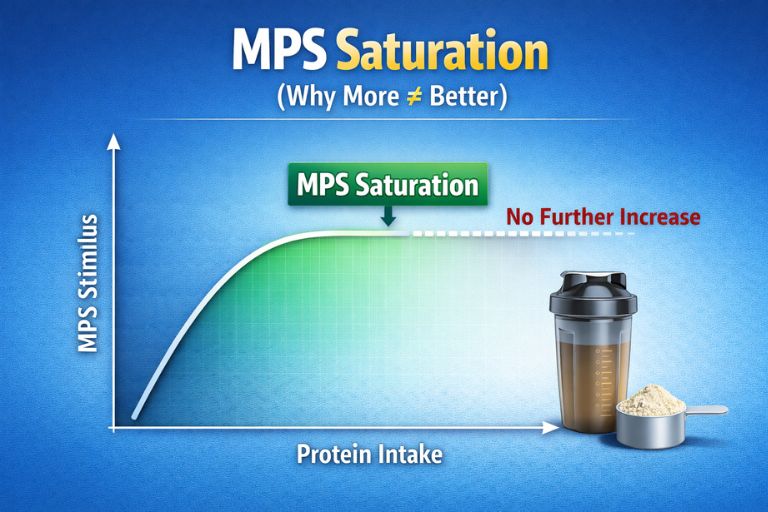
To understand why this range exists, you need to look at how muscle actually grows.
Your body builds muscle through a process called muscle protein synthesis (MPS). But this process has a ceiling — it can only be stimulated to a certain level at a time.
Once that threshold is reached, adding more protein doesn’t further increase muscle building.
It’s a classic case of diminishing returns.
You can think of it like this:
- The first adequate amount of protein turns on the “muscle-building switch”
- Extra protein after that doesn’t make the switch stronger — it just goes unused for that purpose
This is why extremely high protein intake doesn’t translate into faster muscle growth.
If you want a deeper breakdown of how this process works, you can explore our full explanation in the main system on Protein Powder One.
What Changes Your Protein Needs?
While the 1.6–2.2g/kg range works for most people, your exact needs can shift depending on your situation.
1. Calorie Intake
If you’re in a calorie deficit (cutting fat), your body is more likely to break down muscle tissue.
In this case, a higher protein intake helps preserve muscle.
If you’re in a calorie surplus (bulking), protein needs are slightly lower — because your body already has enough energy to support growth.
2. Training Intensity
The harder and more frequently you train, the greater the demand for recovery and adaptation.
More training = more stimulus = slightly higher protein needs.
But again, this still stays within a reasonable range — not unlimited.
3. Experience Level
Beginners often respond to training with less protein.
Advanced lifters, however, need more precise nutrition to continue progressing.
As you get more experienced, optimizing protein intake becomes more important.
How Much Protein Per Meal Actually Matters?
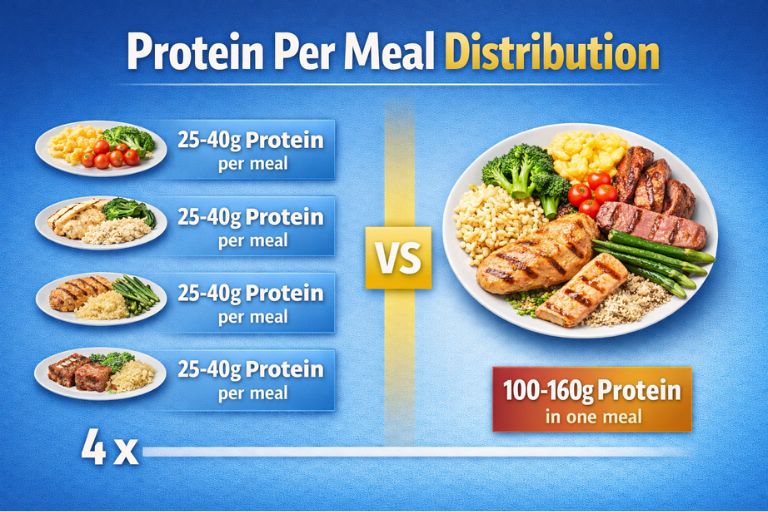
Daily protein is important — but how you distribute it also plays a role.
Your body doesn’t use protein in one continuous stream. Instead, muscle protein synthesis is stimulated in pulses.
This is often referred to as the “muscle full effect.”
A practical approach is:
- 20–40g of protein per meal
- Spread across 3–5 meals per day
This allows you to repeatedly stimulate muscle protein synthesis throughout the day, rather than trying to overload it in one sitting.
Eating 120g of protein in one meal won’t build more muscle than splitting it into multiple meals.
Distribution doesn’t matter as much as total intake — but it still helps optimize the process.
Food vs Protein Powder: What Actually Matters?
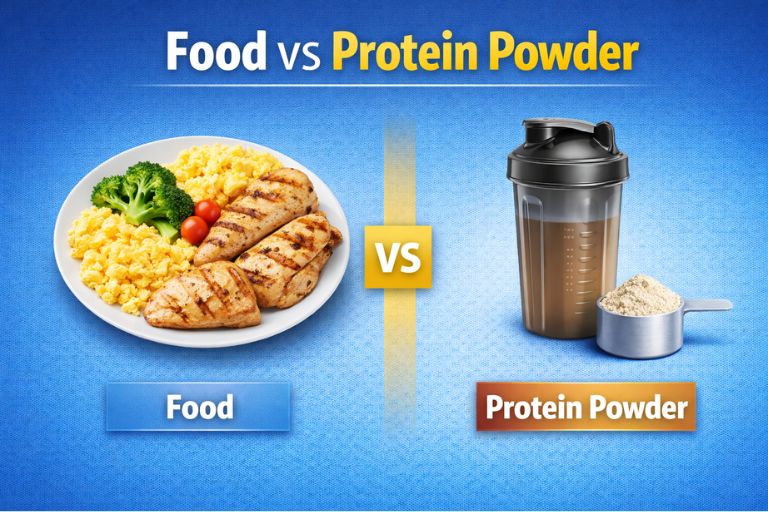
Whole foods should always be your foundation.
Foods like meat, eggs, dairy, and legumes provide not just protein, but also vitamins and minerals that support overall health and recovery.
Protein powders, on the other hand, are not magic.
They don’t build muscle faster.
They don’t increase muscle protein synthesis beyond what whole food protein can do.
What they do offer is convenience.
If you struggle to hit your daily protein target through food alone, something like Protein Powder One can help fill that gap — but it’s a tool, not a shortcut.
The hierarchy is simple:
Total protein intake > food quality > timing > supplements
A Simple Example (So You Can Apply This)
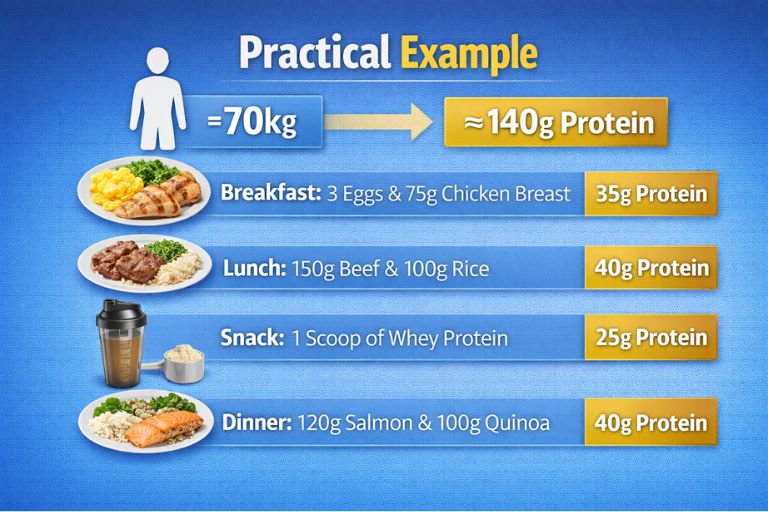
Let’s say you weigh 70kg.
Your optimal protein intake would be:
- 112g to 154g of protein per day
A simple structure could look like:
- Breakfast: 30g
- Lunch: 35g
- Dinner: 35g
- Snack/shake: 20–30g
That’s it.
No extreme diets.
No overthinking.
Just consistency.
The Bottom Line
Protein is essential for muscle growth — but only up to a point.
Eating more than your body can use doesn’t speed up the process. It just adds unnecessary complexity.
Focus on what actually works:
- Stay within the optimal protein range
- Train with enough intensity
- Stay consistent over time
Muscle growth isn’t about extremes.
It’s about doing the basics well — over and over again.
And when you get that right, everything else becomes much simpler.